Google Ads for pest control, one ad group for each pest
We build ad groups around the pests you treat, keep spray buyers out, and count the calls and forms that came from your ads.
- $549 a month
- Google Ads for pest controllers, AUD, GST inclusive
- Month to month
- Added to the $298 website plan, cancel on 30 days notice
- Your account
- You pay Google your ad spend directly, and we never hold your card
Emergency terms, planned terms and the DIY crowd
Pest searches split cleanly. Rats and wasps are urgent, termite inspections are planned, and spray shoppers should never see your ad.
24 hour rat removal
Bid on, urgent campaign, answered hours only
emergency termite treatment
Bid on, termite campaign
pest inspection price
Bid on, planned campaign
termite inspection near me
Bid on, form-first page
rat bait
Negative
pest spray bunnings
Negative
Terms from Google autocomplete on 2026-11-03. Cost per click is pending Keyword Planner and is not shown.
Separating the caller from the shopper
Pest control is a category where the same words come from two kinds of people. One has a problem in the house and wants it gone. The other is in a hardware aisle choosing a spray. They both type cockroach treatment.
You pay for both clicks. So most of the work in a pest control account is on the shopper side. We add negative keywords for sprays, baits, traps, hardware chains and how to guides, and each week we read the search terms report for new ones. Every negative is checked against what you do before it goes in. Our post on negative keywords for local service accounts sets out the method.
An ad group for each pest
Someone searching wasp nest removal wants to see wasps in the ad. Someone searching rat control wants to see rats. A general pest control ad for both reads like a template and gets fewer clicks.
We build ad groups around the pests you treat: wasps and bees, rodents, cockroaches, ants, spiders, bed bugs and so on. Each has its own ads and its own landing page, so the visitor arrives at a page about their problem with a phone number in reach. If you do not treat a pest, there is no ad group, so you never pay to turn away callers.
Termites are a different campaign
A termite inspection is planned. The buyer may be days from settlement or may have spotted damage. The job is worth more and the decision is slower than a wasp nest.
Termites get their own campaign, budget and landing page that explains what an inspection covers and what a report shows. Judging it against the urgent pest campaigns would be unfair to both, so we report them separately.
The urgent pests need an answered phone
A wasp nest over a play area or rats at night produce calls from people who need someone fast. A click from them costs the same as any other, and it is wasted if the phone rings out.
We build the schedule around when someone answers. If your phone is covered in the evenings, the urgent campaigns can run then. If it is not, they pause and the form says when you will ring back. One account we run moved to all hours once its booking form showed that out of hours clicks still turned into bookings. Whether that suits you is a test, not an assumption.
Reviews in the ad
A frightened householder compares businesses on the stars before reading a headline. The ad and your map listing appear on the same results page, so we keep your Business Profile and its reviews in order while the ads run.
Weather moves the budget
Insects peak in spring and summer. Rodents head inside as it gets cold. Termite swarms follow warm, humid weather. A flat budget through the year pays too much in quiet weeks and too little in a rush.
We shift spend between campaigns with the season and review it weekly, and you approve any increase to the ceiling.
Landing pages that answer fast
A caller with a pest in the house reads for a few seconds. The page they land on should name the pest, say the areas you cover and show a phone number that dials on a tap. A long page about the company loses them. We build the short version first and keep the detail lower down for the careful reader.
What we have and have not shown
We run the website and search for a pest controller, and it has given us a clear view of what pest searches look like. That work is search, so we do not present its numbers as Google Ads results. For Ads, our nearest proof is the account we manage for an appliance repairer, which cut wasted clicks and tracked real enquiries.
Counting real enquiries
Google Ads can report conversions that were not enquiries. On the appliance account, Google had been counting about ten times more conversions than there were enquiries. We count calls from the ad, taps on your phone number and quote forms sent, and nothing else. A form asks for a name, a phone number or email, and a comment.
Your account and your spend
You create the Google Ads account and add your own card. You pay Google directly for every click, and we never hold your payment details. Our fee covers managing the account, month to month, and cancels on 30 days notice.
Each month you get a short report with spend, clicks, enquiries and cost per enquiry, plus the changes we made and why.
Related reading: which leads came from your website, ads and Google Business Profile, licence numbers on your website, van and social media in every state, what your privacy policy must say if you run Google Ads, GA4 or a Meta pixel, Google Ads headlines with claims you can prove and whether the Privacy Act applies to your small business.
What counts as a pest control lead
A call at night and a booking form for a house purchase are not the same event, so they are counted apart.
- Call from the ad
- Now
- Counted by length, so a missed or wrong-number call is not a lead.
- Tap on the number on the site
- Now
- Counted separately from the call.
- Quote form
- Same day
- Name, phone or email, and a comment about the pest and the room.
- Pre-purchase inspection request
- Before settlement
- Its own page and conversion, so its cost per enquiry is read beside termite work, not rodent work.
A radius for the van, adjusted by state
Regional
Urgent ads need a radius the van can reach quickly. Termite ads can reach further, and they matter most in Queensland and NSW, where termite risk is highest.
- Presence targeting, so searchers in other cities researching a move are excluded
- Urgent campaigns scheduled to the hours someone answers
- Separate termite budget so a rodent rush never spends it
- Wet and warm spells raise searches for ants and rodents, so the budget is reviewed then
What the ad can and cannot say
State health departments, QBCC and the ACCC
Pesticide application for a fee is a licensed activity in every state we checked. We found no pest-specific rule on showing the licence number in ads, except Queensland chemical termite work, where the QBCC advertising rule applies. The ACCC says efficacy and price claims must be accurate and substantiated.
Ads avoid words such as guaranteed and 100% effective, and the licence number goes on the landing page. A Queensland termite ad carries the licensed name and QBCC number.
Read the QBCC advertising ruleWork we run for pest controllers
One is a pest controller whose website and search we run. We show it for that work, not as Google Ads results. The other is an appliance repairer whose Google Ads we manage, shown for how we set up and track an account.
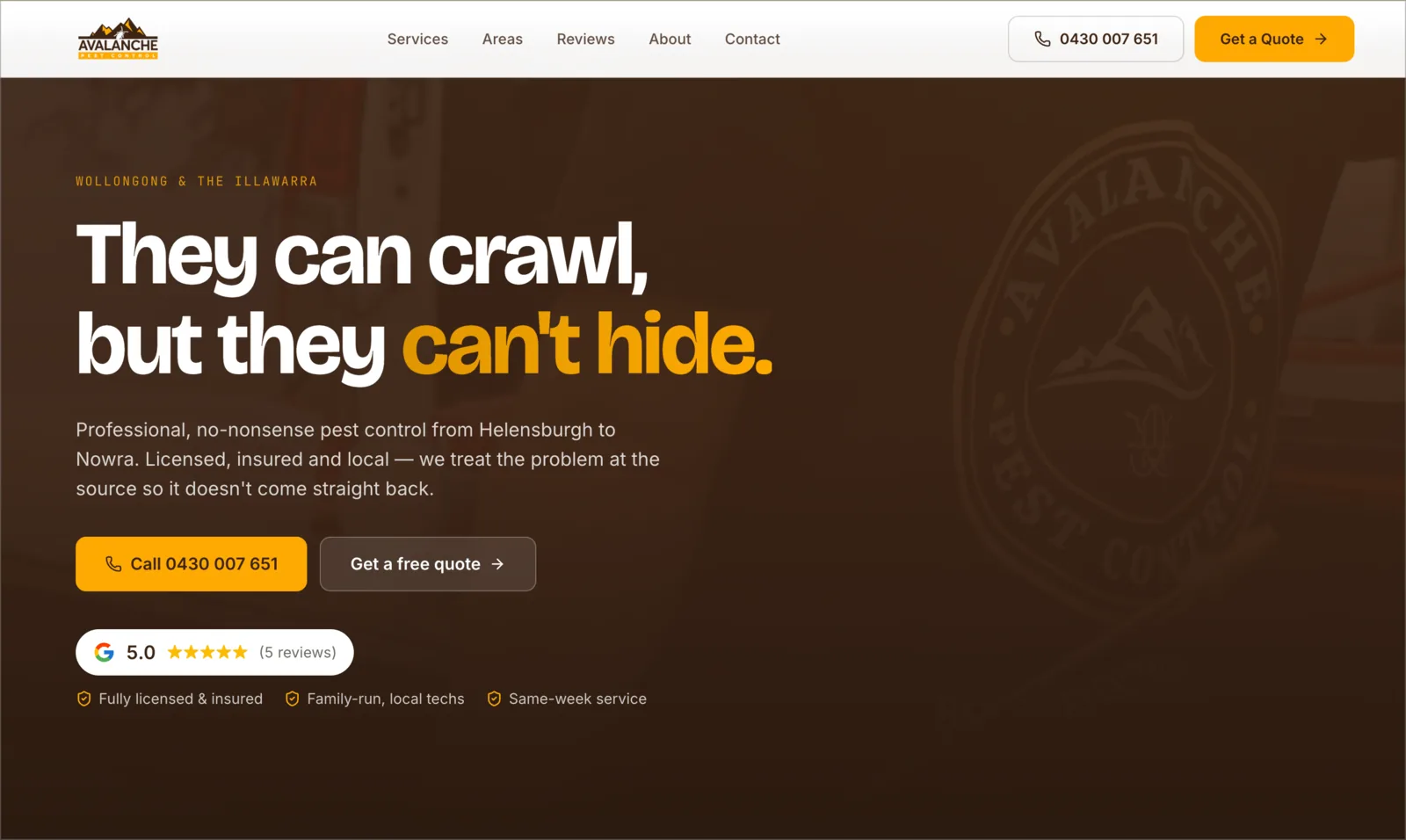
An Ads account we run in another field
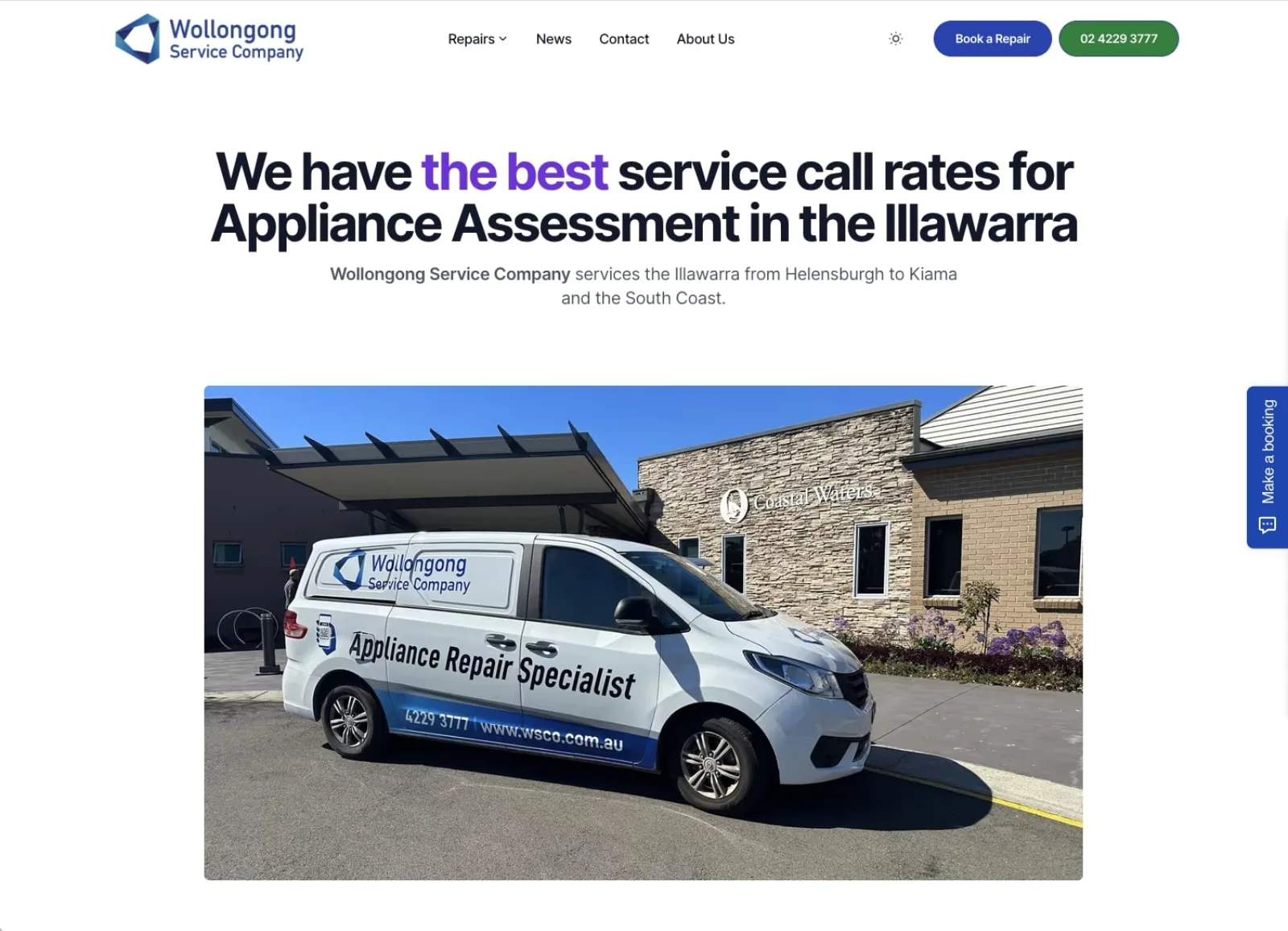
Google Ads for pest controllers: your questions
Do Google Ads suit pest control?
How much should a pest controller spend?
Should termite work be advertised separately?
How do you keep out do it yourself searches?
Do you run the ads at night?
What licence claims can the ads make?
How do you count which ads brought a job?
What you get every month
Included in every plan, from the first day.
- Your client dashboard
- Every enquiry, your visitors and your Google results in one login.
- Weekly or monthly reports
- A summary email with the numbers and what we changed.
- Same-day website updates
- Send a photo or a few words and we make the change.
- Our first-party tracking
- How visits and enquiries are counted, and what we leave out.
We build websites that convert.
We find your next customers on Google and ChatGPT, then convert them with fast, high-performing websites.
Google Ads for pest controllers, month to month.
$549 a month AUD, on top of the $298 website plan.