Google Ads for locksmiths, run only when the phone is answered
We build lockout and rekeying campaigns around the hours you answer, keep the ads honest, and count the calls that turned into jobs.
- $549 a month
- Google Ads for locksmiths, AUD, GST inclusive
- Month to month
- Added to the $298 website plan, cancel on 30 days notice
- Your account
- You pay Google your ad spend directly, and we never hold your card
Bait pricing is what regulators are chasing
ACCC, state fair trading bodies and Google
The ACCC says a price that is only part of the cost must come with the single total price. South Australian and Victorian regulators have published warnings about advertised locksmith fees of $30 to $120 and from $45 that were followed by far larger bills. Google also has verification requirements for locksmith advertisers, which change, so we read the current ones before launch.
Ads state the total for a standard lockout or a clear range. They carry the licence number the state requires, such as the Master licence number in NSW, and run only in hours the phone is answered.
Read the ACCC price displays guidanceThe phone is the conversion
A lockout caller rarely fills in a form. The account is built to count calls honestly and to run only when someone answers.
- Call from the ad
- Now
- Counted by length, so a hang-up or a wrong number is not a lead.
- Tap on the number on the site
- Now
- Counted separately, since a tap does not always connect.
- Rekey or lock change form
- Days
- Name, phone or email, and a comment. Slower, planned, and tracked apart from lockouts.
- Missed call
- Now
- The most expensive click of the day. The account is paused in hours when no one answers.
Bid on the need, block the shoppers
Locksmith words are shared with people buying locks, chasing car manuals and looking for the wrong city.
Bid on, answered hours only
- locked out of house
Bid on, tight radius
- emergency locksmith near me
Bid on, planned campaign
- rekey locks near me
Bid on, total on the page
- change locks price
Negative
- locksmith training course
- lock picking
Terms from Google autocomplete on 2026-11-03. Cost per click is pending Keyword Planner and is not shown.
The phone decides whether the account works
A locksmith ad is a promise that someone will pick up. Callers are outside their own door and have no patience. When a call rings out, they dial the next listing. You have paid for the click and lost the job.
So we start with the phone. We ask when you really answer, and the schedule follows. If you take night calls, the lockout campaign runs at night. If you stop at six, it stops at six. A narrow, well-answered schedule beats an all hours schedule that sends half the calls to voicemail.
Check Google's locksmith rules first
Google has verification requirements for locksmith advertisers. We have not written down their details here, because they change and a stale summary would mislead you. Before a locksmith campaign goes live, we read Google's current locksmith verification requirements with you and confirm your business meets them. If it does not yet, we say so and wait.
A real business, in the ad and behind it
Customers of this trade have been burnt, and an anonymous ad is a warning. We write ads with your real business name, the area you serve, the hours you answer and a phone number. Photos and details on the landing page match. The page shows the same name as your invoices and your vehicle.
We avoid claims we cannot check, such as the cheapest price or arrival within minutes. If you commit to a response time, we use it only if you can keep it.
Lockouts and planned jobs are separate
A lockout is urgent and priced at a premium. Rekeying after a break in, security upgrades, safes and commercial key systems are planned. The buyers read, compare and call tomorrow.
We run them as separate campaigns. The lockout campaign has a tight schedule, a high bid and a landing page with the number first. The rekey and upgrade campaigns run in business hours, point to pages that explain the work and take quote forms. Commercial master key enquiries get a page of their own and a modest budget, since those buyers are fewer and worth more.
The landing page for a locked out caller
A person outside their door reads a page for about five seconds. The number goes first and dials on a tap. Under it: your business name, your service area, the hours you answer, and a line on what affects the price, so a fee at the door is not a surprise. A longer page for the careful reader sits below. We build the short version first and test it on a phone.
Keeping the wrong searches out
Locksmith searches pick up people who are not customers. Some want to learn how to pick a lock. Some want a job or a course. Some want to buy a lock or a safe, not have one fitted.
Each week we read the search terms report and add negatives for those searches. Each negative is checked against what you do before it goes in, so a car key search is not blocked if you cut car keys. Our post on negative keywords for local service accounts explains the method.
Counting calls that became jobs
Google Ads can report conversions that were not enquiries. On the appliance repair account we manage, Google had been counting about ten times more conversions than there were enquiries. See the appliance repairer case study for the details.
On a locksmith account we count calls from the ad, taps on your phone number and forms sent. A form asks for a name, a phone number or email, and a comment. A ringing phone is not proof of a job, so each month we ask you about missed calls and compare.
Your account and your spend
You create the Google Ads account and add your own card. You pay Google directly for every click, and we never hold your payment details. We are added as a manager, and you can remove us whenever you like.
Each month you get a short report with spend, clicks, enquiries and cost per enquiry, plus the changes we made and why. If a campaign is not producing enquiries, we say so and move the budget to one that is.
Related reading: which leads came from your website, ads and Google Business Profile, licence numbers on your website, van and social media in every state, what your privacy policy must say if you run Google Ads, GA4 or a Meta pixel, Google Ads headlines with claims you can prove and whether the Privacy Act applies to your small business.
Accounts and sites we run in other fields
We do not run a locksmith account yet. One is an appliance repairer whose Google Ads we manage, and the other is a pest controller whose site and search we run. They show how we set up and track an account. They are not locksmith results.
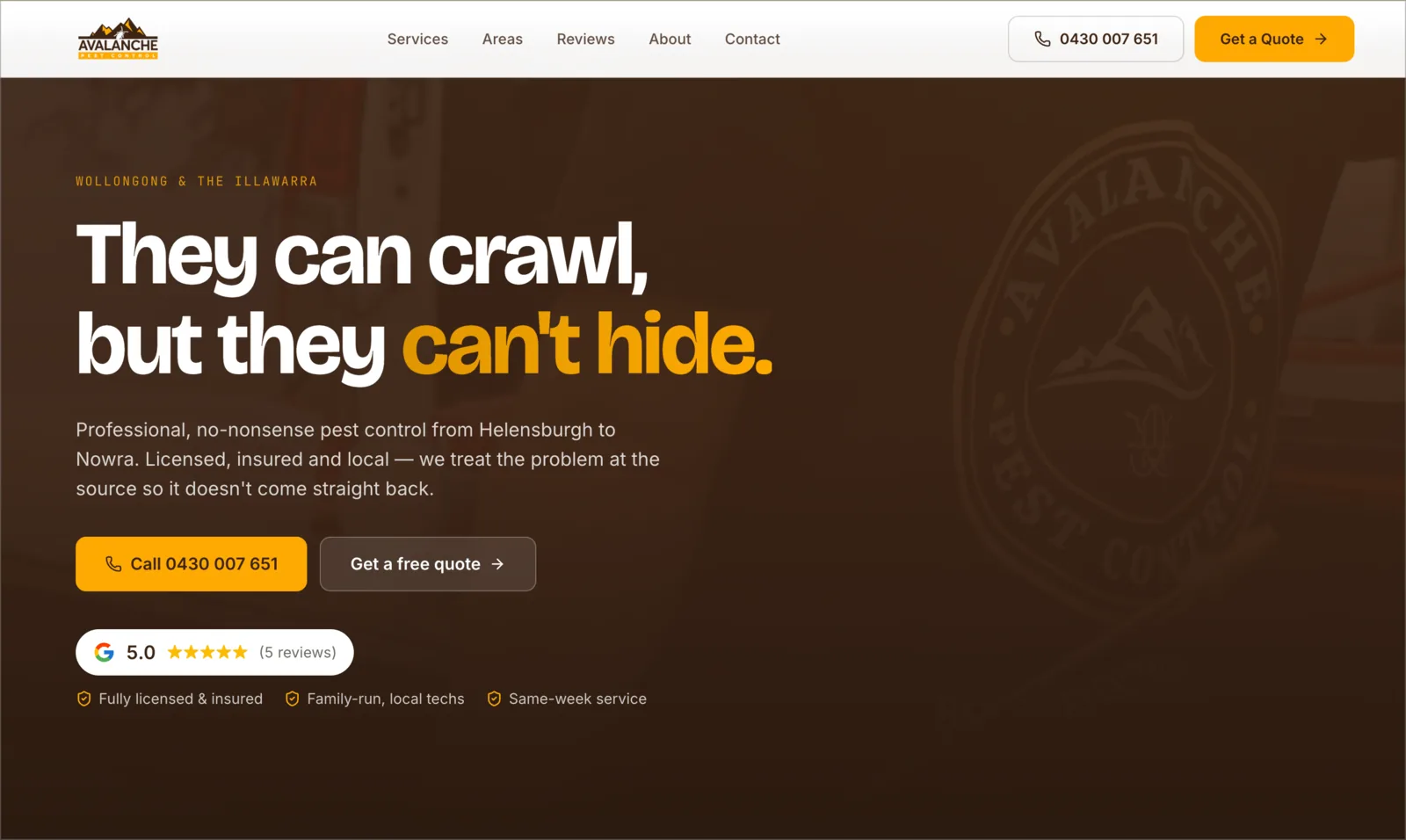
Avalanche Pest Control
4xMore clicks from Google
A redback nest, rats in the roof: people ring the first pest controller they find. After the rebuild, Google sends this one about four times the clicks.
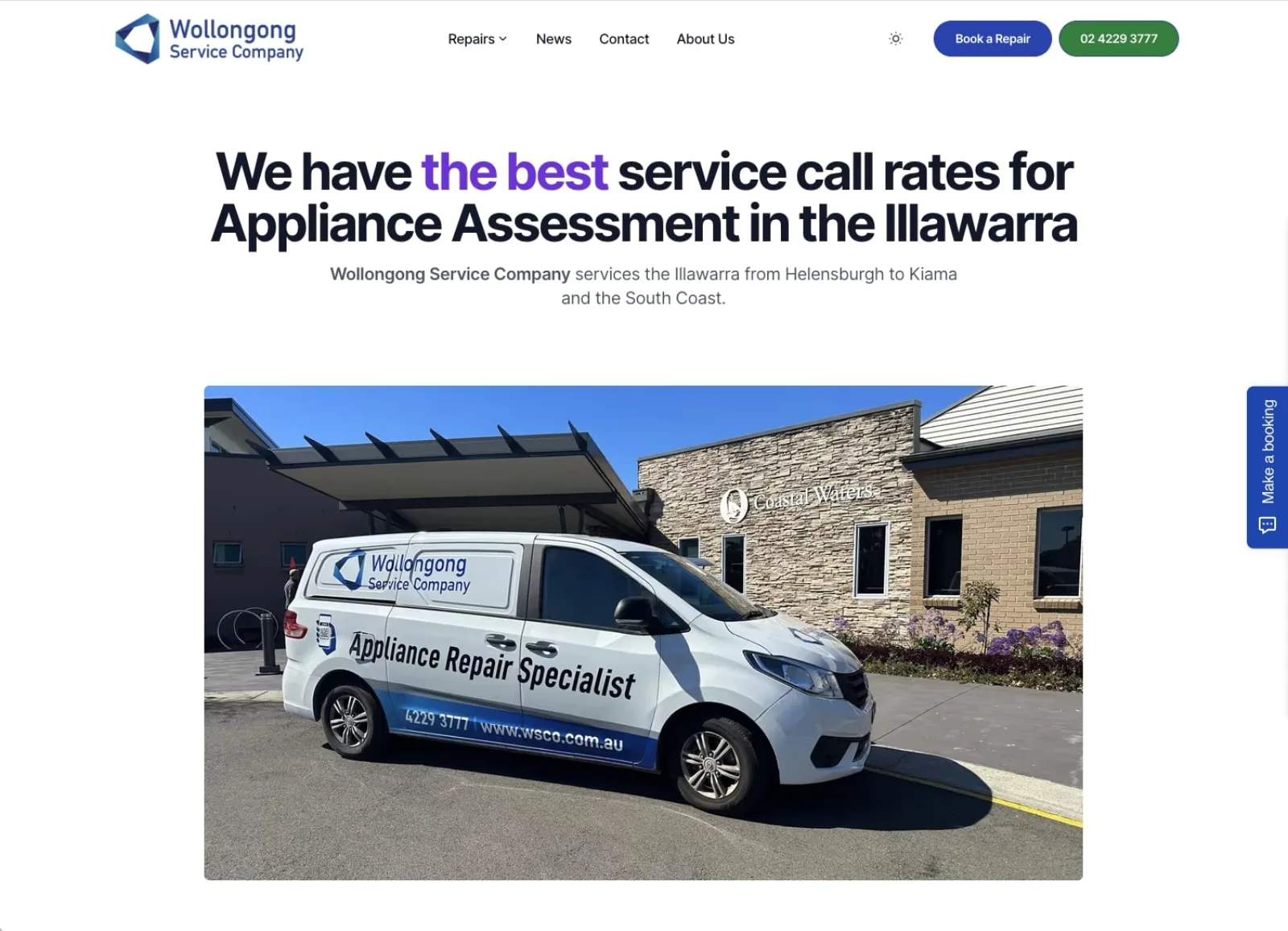
Wollongong Service Company
~200Enquiries a month
An Illawarra appliance repair business with a 20 year reputation now gets about 200 enquiries a month from a tradie website built for phones and local search.
Google Ads for locksmiths: your questions
Does Google check locksmith advertisers?
Should my ads run at night?
How much do lockout clicks cost?
What should the ad say?
Which searches should I keep out?
How do you count which ads brought a job?
Do we keep the account if we leave?
What you get every month
Included in every plan, from the first day.
- Your client dashboard
- Every enquiry, your visitors and your Google results in one login.
- Weekly or monthly reports
- A summary email with the numbers and what we changed.
- Same-day website updates
- Send a photo or a few words and we make the change.
- Our first-party tracking
- How visits and enquiries are counted, and what we leave out.
We build websites that convert.
We find your next customers on Google and ChatGPT, then convert them with fast, high-performing websites.
Google Ads for locksmiths, month to month.
$549 a month AUD, on top of the $298 website plan.